I’ve pointed out over the past few years to many that the only thing stopping a President from acting like a king is his own character. There are a mere three limitations on the President’s power:
1. His term of office. It ends at a date certain – no matter what else happens, after 4 or 8 years, on a certain January 20th, he’s no longer President and can’t order a White House orderly to so much as pick up a piece of paper.
2. He cannot spend money without Congressional authorization.
3. He may be impeached.
When our Founders gathered in 1787, they had in their collective memory the forms and ways of lots of different government systems – monarchy, republic and democracy. While a lot of my fellow TEA Parties argue the Founder created a Republic, that is not quite true. The Founders created a hybrid combining what they figured was best about a monarchy, a democracy and a republic. The House is Democracy; the Senate is Republic; the Presidency is Monarchy. Elective monarchy, to be sure – but monarch none the less. Back in the 1920’s when Winston Churchill was writing his stupendous The World Crisis about the First World War, he described to what was mostly a foreign audience the American system of government – and he noted that the President of the United States had, in practical terms, more power than any other potentate on earth. Keep in mind that Churchill was writing about a time when there was a Czar in Russia and a Kaiser in Berlin. He was not at all wrong – even a theoretical autocrat like the Czar was hemmed in and limited in the exercise of his power by more systems of law and custom than was – or is – the President of the United States. The United States was lucky first in having the magnificent character of George Washington as our first President, and then in the fact that even his most flawed successors – until just recently (ie, 2009) – tried to in some manner mold themselves in to the example provided by Washington. Washington never abused his overwhelming authority and his successors until Obama refrained, from the most part, from so doing (and, no, Nixon wasn’t the most abusive – it is actually rather a three way tie between Theodore Roosevelt, Woodrow Wilson and FDR). But now that the monarchist cat is, so to speak, out of the bag, I think we need some reforms.
We must, of course, have an executive who can act – and act independently of Congress and the Courts, especially during a time of national emergency. But with that, we must curb the power of the presidency to ensure it more closely conforms to the ideals of the Founders and the example of George Washington. Given this, I propose the following:
1. Conviction in an impeachment trial to require 57 votes in the Senate rather than 67. Its still a high bar, but not nearly as high as 67, which is just about impossible to attain (as is seen by the fact that in more than 200 years, no President has been removed via impeachment – though it is true that Nixon resigned because he was told there would be 67 votes to convict…but, still, we should have removed four or five presidents by now).
2. Employees of the executive branch agencies – from highest to lowest – are all to serve at the pleasure of the President. This does, in a very real way, increase Presidential power – but it also lets everyone working in the executive branch agencies know that come four to eight years hence (at the latest) there will be a new President in town who can fire them at will. This, I think, will induce a measure of caution in to bureaucrats – make them less likely to just blindly follow the commands – direct or indirect – of a President to, say, break the law as the IRS did recently in its attacks on TEA Party groups.
3. No money shall be drawn from the Treasury for offensive military action save upon an official declaration of war against an identified nation or nations. No more going to war with “Congressional authorization” (Iraq) or without (Libya). If a President wants to war on someone, he has to go down to Congress and request a declaration of war. No more half wars; no more quasi-wars; no more police actions. War is war, period.
4. Limit the power of pardon to only those convicted of a crime prior to the President’s term. In other words, no more January 19th pardons of political cronies as a President exits.
5. Annually, Congress shall vote on the issue “Resolved: the President has in the previous 12 months faithfully executed all of the laws of the United States”. If it passes, then nothing happens. If it is defeated, then articles of impeachment are to be voted on in the House. Congressmen are to be held legally responsible for this vote: if it is found at any time that they voted in favor of the resolution when they knew it was not correct, they can be sent to jail for 20 years. This is an annual “impeachment jeopardy” for the President – and a massive risk for the Congressmen. Better think carefully, Mr. President, about not enforcing laws you don’t like…and Congresscritter, how’s about 20 years in jail if you’re just being a partisan hack and backing the President because he’s in your party?
Anyways, those are some of my ideas – please bring forward any you can think of.
UPDATE: Congressional Republicans are looking in to curbing Presidential power:
Congressional Republicans are considering various options to curb President Obama’s use of executive powers, which they say are excessive.
GOP officials have long claimed that the president has violated the law and the Constitution through administrative actions on issues ranging from immigration to nominations to the U.S. military involvement in Libya.
But the president’s recent move to change ObamaCare through an administrative fix has sparked a new round of discussions within the conservative base and Republicans on Capitol Hill…
It is, in a sense, a shame we have to do this – but given that Democrats will continue to nominate people like Obama who have no sense of what a law is, we have to make certain that future President are not able to do the illegal acts Obama has done.
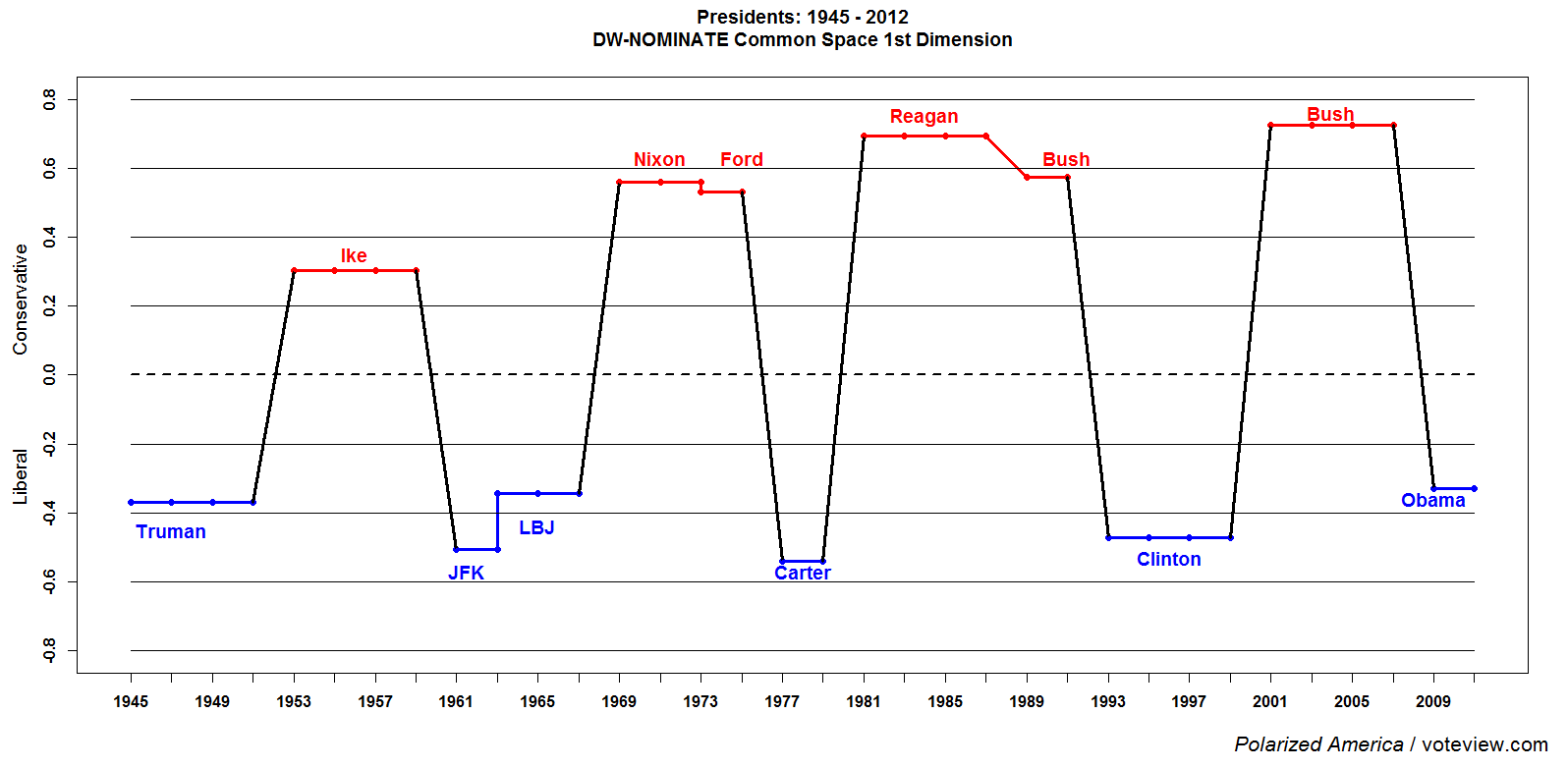 So, according to this analysis, we have to believe the following:
 Blogs For Victory
You must be logged in to post a comment.